
Summary: Who this is for?
Treasure Valley homeowners who’ve just been through a hailstorm or high-wind event and aren’t sure whether their roof needs attention — or how to handle the insurance claim if it does.
Key takeaways:
- Hail damage is rarely visible from the ground — most of it shows up on shingles, flashing, vents, and gutters where only a trained eye will catch it.
- Homeowners insurance typically covers hail and wind damage, since both are considered sudden, accidental events rather than gradual wear.
- Idaho doesn’t set a hard statewide deadline for filing a claim, but most insurers require notice “promptly” or within one year — waiting is the single biggest reason claims get denied.
- A professional roof inspection before you call your insurance company gives you documentation that strengthens your claim and protects you from a lowball adjuster estimate.
- Storm chasers — traveling crews who show up door-to-door after big weather — are the number one cause of botched insurance roof claims in the Treasure Valley.
What’s inside:
- What hail damage actually looks like on a roof
- Why Boise sees more hail damage than people expect
- What to do in the first 48 hours after a storm
- Does homeowners insurance cover hail damage?
- How to file a roof insurance claim, step by step
- Mistakes that get claims denied or underpaid
A hailstorm rolls through the Treasure Valley, the sun comes back out an hour later, and most homeowners either think about their roof again — until a leak shows up eight months later during a spring rainstorm.
That gap is exactly where hail damage roof repair claims go wrong. The damage is real the day it happens, but it’s almost never visible from the driveway, and by the time it announces itself as a leak, an insurance company can argue it’s “wear and tear” instead of storm damage.
This guide walks through what hail damage actually looks like, how homeowners insurance handles it, and how to file a claim that gets approved instead of denied.
What Hail Damage Actually Looks Like on a Roof
Hail doesn’t have to be golf-ball sized to cause real damage. Even pea- to marble-sized hail, driven by wind, can bruise asphalt shingles and knock the protective granules loose.
Those granules are what shield the shingle from UV rays — once they’re gone, the shingle ages years in a single season.
Signs You Can Actually Check From the Ground
- Dents or dings in gutters, downspouts, and window screens
- Damage to soft aluminum surfaces like AC units, mailboxes, or vent caps
- Bruised or missing granules collecting in gutters and at downspout outlets
- Cracked or split shingles visible along roof edges
What Only a Trained Eye Will Catch
- Soft, bruised spots on shingles that haven’t cracked yet but will fail early
- Compromised flashing around chimneys, skylights, and vent pipes
- Impact marks on the underlayment once a shingle is lifted for inspection
- Granule loss that’s uneven across roof slopes, which adjusters look for as proof of storm origin versus age
This is the reason a ground-level look — or a photo from a phone — usually isn’t enough to confirm hail damage roof repair is actually needed. It’s also why we never charge for a storm damage inspection: if there’s nothing there, we’ll tell you.
Why Boise Sees More Hail Damage Than People Expect
The Treasure Valley sits in a corridor that gets regular severe thunderstorm activity from late spring through summer, and hail is one of the more common side effects of those storms.
It’s easy to assume hail is a Midwest problem, but Ada and Canyon County homeowners file storm damage claims every single season — often after storms that barely made the local news.
What to Do in the First 48 Hours After a Storm
- Photograph everything at ground level first — gutters, siding, AC units, vehicles, and any hail that’s still on the ground for size reference.
- Don’t climb up and inspect the roof yourself. Storm-damaged shingles can be unstable, and roofs are more dangerous when wet or windy.
- Check your attic for new light, moisture, or staining after the storm, which can indicate a breach that needs immediate attention.
- Schedule a professional roof inspection as soon as reasonably possible. The sooner damage is documented, the harder it is for an adjuster to argue it happened some other way.
- Hold off on signing anything with a contractor who knocked on your door the same week as the storm. More on that below.
Does Homeowners Insurance Cover Hail Damage?
In most standard homeowners policies, hail and wind damage fall under “dwelling coverage” as sudden and accidental events, which is a very different category than gradual deterioration.
According to the Insurance Information Institute, most homeowners policies do cover hail damage to roofs, though the payout depends on your policy’s specific language around actual cash value versus replacement cost.
That said, coverage isn’t automatic. Insurers can and do dispute whether damage is storm-related versus age-related wear, which is exactly why a documented, professional inspection matters before you ever call to file.
How to File a Roof Insurance Claim, Step by Step
- Get a professional inspection and written damage report first. This becomes your evidence, not just a sales pitch.
- Contact your insurance company promptly. Most policies require notice “as soon as reasonably possible” — some set a one-year limit, but waiting even a few months weakens your position.
- Request the adjuster’s inspection date and ask to have your roofing contractor present. An adjuster inspects dozens of roofs a week; a roofer who’s already seen your specific damage can point out what’s easy to miss.
- Compare the adjuster’s scope of work to your contractor’s estimate. It’s common for an initial adjuster estimate to miss damaged flashing, vents, or gutters — these can and should be added through a supplement.
- Understand your settlement type. Actual cash value (ACV) policies pay depreciated value up front, with a second “recoverable depreciation” check released after the repair is complete. Replacement cost value (RCV) policies pay closer to full cost. Know which one you have before repairs start.
- Schedule the repair or replacement and keep every document — inspection report, claim number, adjuster correspondence, and final invoice — in one folder in case questions come up later.
Mistakes That Get Claims Denied or Underpaid
- Waiting too long to report the storm. Time gaps make it easier for an insurer to question whether the damage is storm-related.
- Signing a contract with a storm-chasing crew before the claim is even filed. These traveling companies often disappear before warranty work is needed, and some pressure homeowners into signing an “assignment of benefits” that hands over control of the claim entirely.
- Skipping the professional inspection and relying on the adjuster’s assessment alone. Adjusters aren’t roofers — a second, contractor-level opinion regularly turns up damage the initial estimate missed.
- Not knowing your ACV vs. RCV settlement terms, which can lead to homeowners assuming they’ve been shorted when a second check was simply pending all along.
Get a Free Storm Damage Inspection
If a recent storm has you wondering whether your roof took a hit, don’t wait for a slow leak to answer the question for you. E&H Roofing has handled storm damage assessments and insurance claim support across the Treasure Valley for over 20 years, and we’ll always tell you honestly whether you have damage worth claiming.
Schedule Your Free Roof Inspection
Frequently Asked Questions About Hail Damage Roof Repair
How do I know if my roof has hail damage?
Look for dented gutters, downspouts, or AC units first — these soft metals show impact marks even from small hail. On the roof itself, granule loss, bruised or cracked shingles, and damaged flashing are the main signs, but most homeowners need a professional inspection to confirm it since a lot of hail damage isn’t visible from the ground.
What size hail actually damages a roof?
Hail as small as three-quarters of an inch (about the size of a penny) can bruise asphalt shingles and strip granules, especially when it’s driven by wind. Damage severity depends as much on wind speed and hail density during the storm as it does on hail size alone.
Will my insurance rates go up if I file a hail damage claim?
Weather-related claims like hail damage are typically treated differently than at-fault claims, though this varies by insurer. It’s worth asking your agent directly, since policies and state regulations differ.
How long do I have to file a roof insurance claim in Idaho?
Idaho doesn’t set one universal deadline — it depends on your specific policy, which often requires notice “promptly” or within one year of the loss. The safest approach is to report storm damage as soon as it’s discovered rather than assuming you have time to wait.
Does insurance cover a full roof replacement, or just repair?
It depends on the extent of the damage. If hail has compromised a significant portion of the roof, most insurers will approve a full replacement of that slope or the entire roof. If damage is isolated, insurers often approve a repair instead — which is another reason a detailed, section-by-section inspection report matters.
What’s the difference between ACV and RCV coverage?
Actual cash value (ACV) pays the depreciated value of your roof up front, with a second check for “recoverable depreciation” issued once repairs are complete and proof of payment is submitted. Replacement cost value (RCV) pays closer to the full replacement cost from the start. Check your declarations page to see which one applies to your policy.
Do I need to hire a public adjuster?
Not usually. A public adjuster works on your behalf for a percentage of the claim, which can make sense for large, disputed commercial claims, but most residential hail damage claims move smoothly with a solid contractor inspection report and direct communication with your insurance adjuster.
Can I choose my own roofing contractor for insurance repair work?
Yes. Your insurance company can recommend contractors, but you are never required to use one of their preferred vendors. It’s worth choosing a local, registered contractor who will still be around for warranty service — not just whoever shows up fastest after the storm.
What if the insurance adjuster says there’s no damage?
Request a copy of the adjuster’s report and have your roofing contractor review it against their own inspection findings. It’s common for a contractor to identify damaged flashing, vents, or granule loss that a fast adjuster visit missed, and that documentation can support a formal appeal or reinspection request.
How much does a professional roof inspection cost?
Most reputable local roofing companies, including E&H Roofing, offer free storm damage inspections — there’s no reason to pay out of pocket just to find out whether you have a claim worth filing.
Do all hailstorms in Boise cause roof damage?
No. Many hailstorms pass through with little to no impact, especially with small, low-density hail and light wind. That said, it’s worth a quick inspection after any storm that leaves visible hail accumulation or damages softer exterior surfaces like screens, siding, or patio furniture.
What should I do if I already have a small leak after a storm?
Address it right away — a small leak after a storm is usually a sign of a breach that needs a tarp or temporary repair immediately, followed by a full inspection to document the cause before your ceiling or insulation take on more water damage.
E&H Roofing provides hail damage roof repair Boise homeowners can count on, plus storm damage roof repair across the Treasure Valley and help through every step of the insurance claim.
Hail damage roof repair Boise homeowners can count on starts with knowing what a storm actually did to the roof. Late afternoon storms roll through the Treasure Valley foothills more than most people expect, and they bring hail and wind that can do real damage across Boise, Meridian, Nampa, Eagle, and Star without always looking dramatic from the ground.
The tricky part usually isn’t the repair. It’s proving to the insurance company that the damage is storm-related and not just normal wear, which is exactly where having a local roofer in your corner at the adjuster meeting makes a real difference.
Storm Damage Services We Provide:
- Free storm damage inspection: photo documentation of hail hits, wind-lifted shingles, and damaged flashing.
- Insurance claim assistance: we attend the adjuster meeting with you so nothing gets missed or under-scoped.
- Emergency tarping: for active leaks while your claim is in process.
- Full repair or replacement: completed once your claim is approved, with a magnetic nail sweep and dumpster haul-away standard on every job. See our Roof Replacement page if a full replacement is needed.
What Happens After You Call
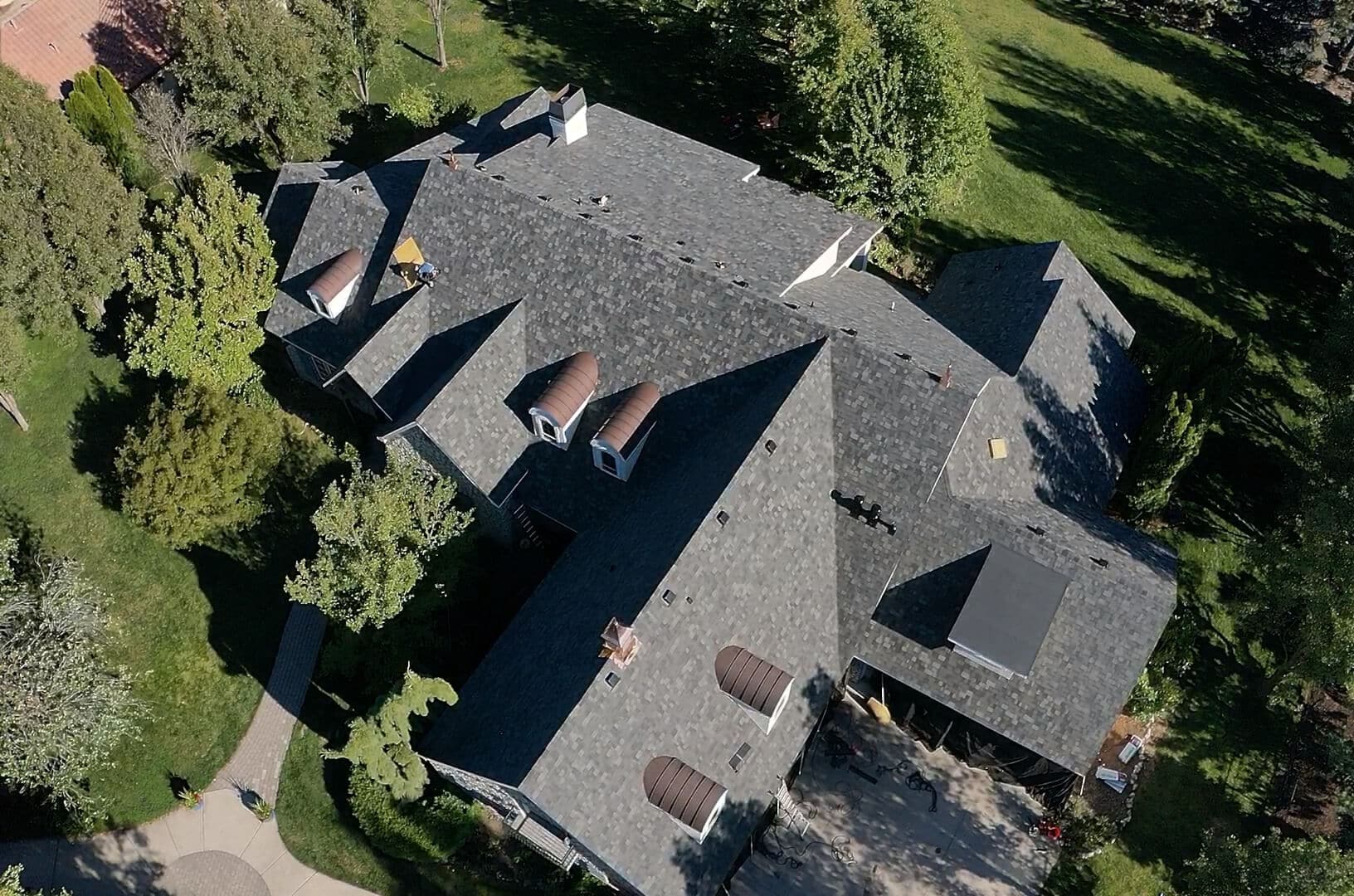
We Inspect and Document First
Before anything is filed, we walk the roof and photograph the damage the way an adjuster needs to see it, so the claim starts with real documentation instead of a guess.
We Show Up to the Adjuster Meeting
We meet the adjuster on-site and point out damage that's easy to miss from a quick walk-through. If items were missed, we can request a supplement to the original estimate.
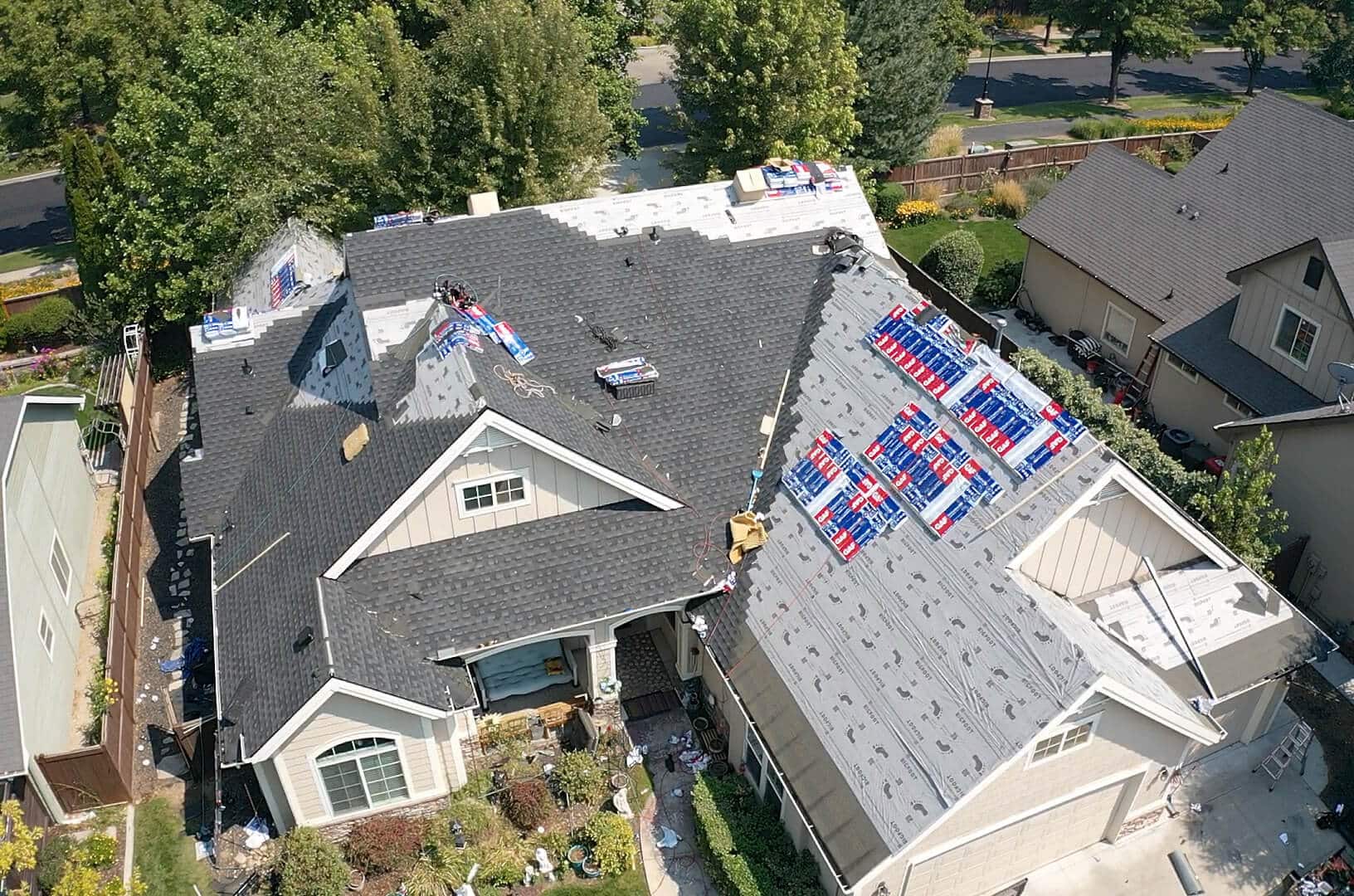
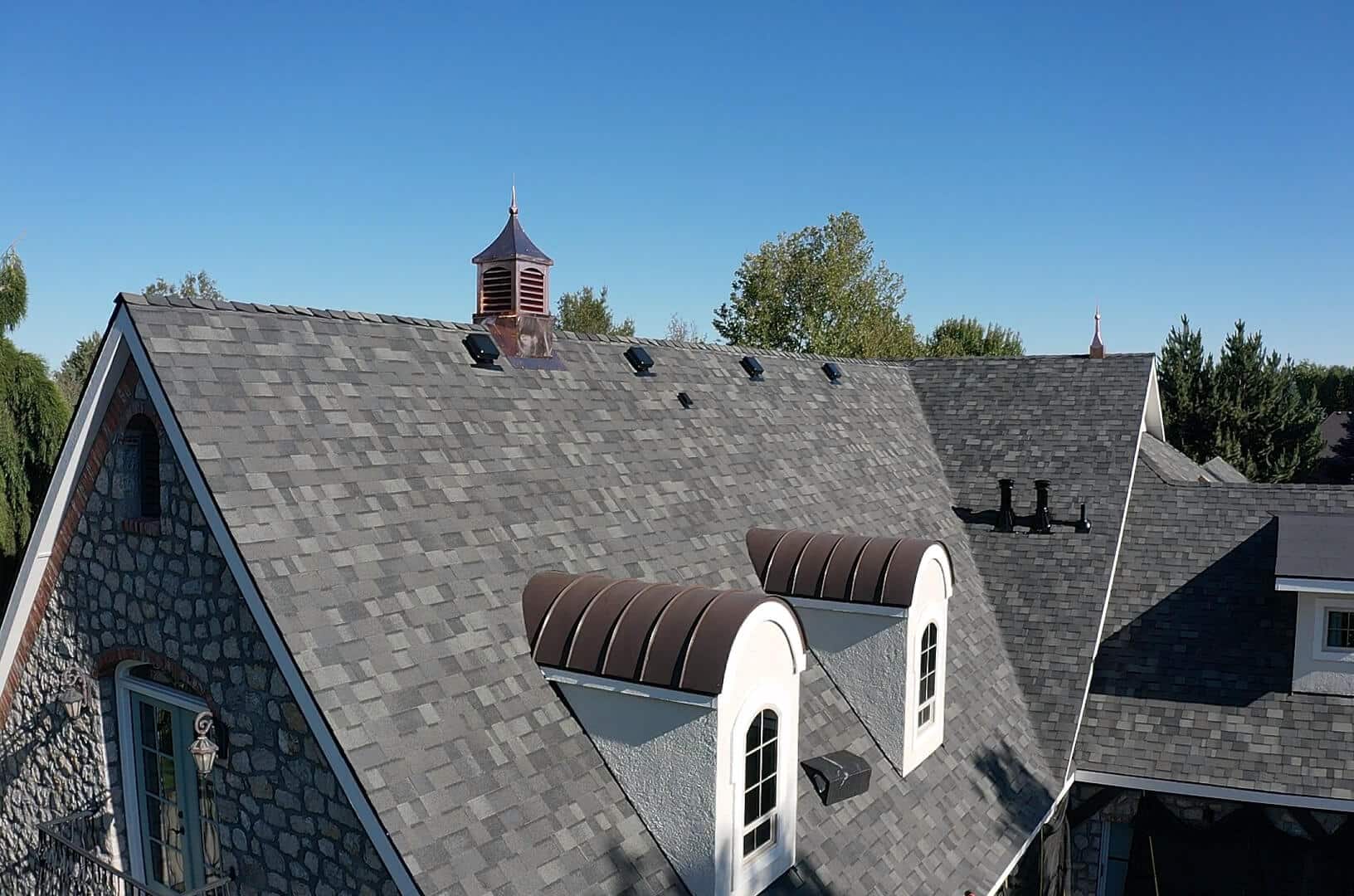
We Complete the Work and Stand Behind It:
Once the claim is approved, we schedule the repair or replacement. We're typically booking about 2 weeks out. Every roof we install is backed by our 10-year workmanship warranty, plus a 30-50 year manufacturer warranty depending on the materials.
Storm & Hail Damage FAQ
How much does a roof replacement cost in the Treasure Valley?
Most standard policies cover sudden storm damage like hail, wind, and falling trees. They don’t cover gradual wear. If your roof was already aging before the storm hit, an adjuster may depreciate or partially deny the claim, which is why having a roofer present at the inspection matters.
How do I know if my roof has hail damage?
Hail damage isn’t always obvious from the ground. Granules collecting in your gutters, dented gutters or downspouts, and dented vents or flashing are all signs worth a professional inspection, even if the shingles look fine from the yard.
Is the storm damage inspection free?
Yes. Our roof inspections are free, with no commitment required.
Get a Free Storm Damage Inspection
Call (208) 608-5569 or complete our online form. We’ll inspect your roof before you talk to your insurance company. Hablamos Español.
Why Treasure Valley Homeowners Choose E&H Roofing
E&H Roofing has earned 160+ Google reviews from homeowners across the Treasure Valley.
Authorized Contractor For: